
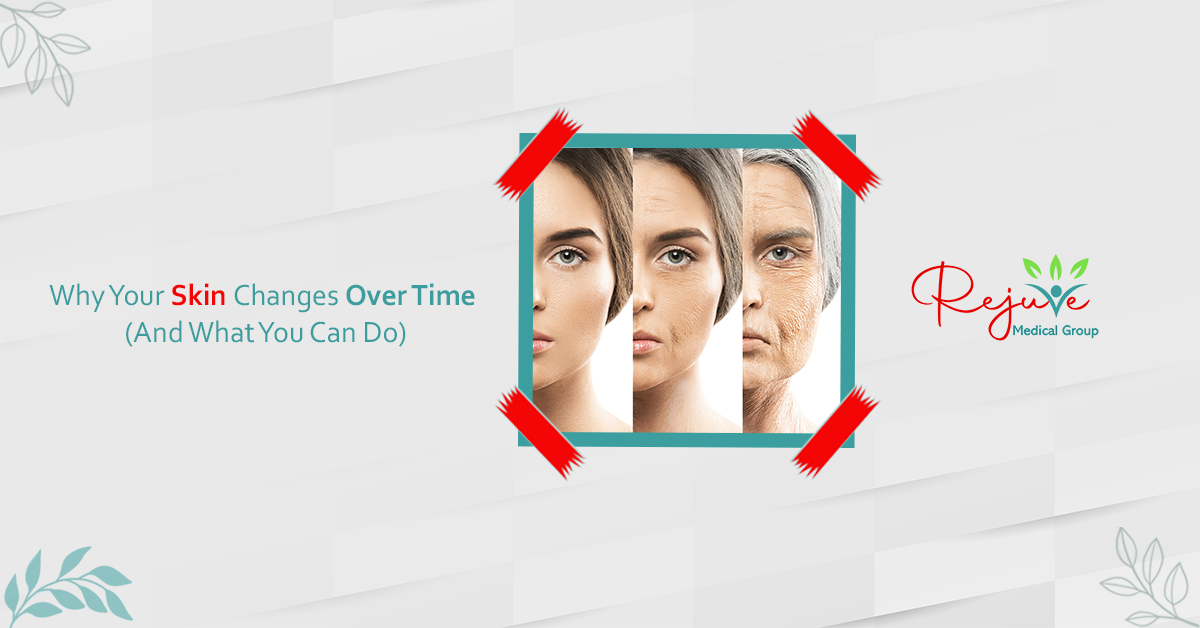
There’s this moment when you notice something different, normally when you are washing your face or simply doing your hair in the mirror.
Maybe it’s how the light catches a line you hadn’t seen before or how your skin feels under your hands.
Think about how much our skin holds.
Every late night, every sunny afternoon, every season we’ve moved through. It makes sense that it would show some of that history, right?
The one thing that makes this entire thing make sense is that skin changes do not occur by chance.
The truth is that there is a logic to what is going on, and when you know it, you can work with it rather than feel like you are struggling with something you have no control over.
Skin Changes: Here’s What’s Happening
Your skin has been shielding you against everything all these years: sun, pollution, stress hormones, and that month when you weren’t drinking enough water.
Intrinsic aging occurs at a genetically fixed rate that can mainly be attributed to an accumulation of harmful byproducts of cellular metabolism.
It is as though the cells of your skin are tired of all that effort.
The modifications occur gradually, then suddenly.
The production of skin collagen and elastin declines by 1 percent annually, which may not seem much until you consider that it has been occurring over the past decades.
How Your Skin Ages
There are five types of skin aging, but these four are the ones that show up most:
- Your genetic blueprint – Some people hit the genetic lottery with skin that ages slowly. Others work with what they inherited. This is your foundation, before life adds its layers.
- Sun exposure – This is the big one. UV damage creates most of what we associate with aging skin—those deeper lines, dark spots, changes in texture. It’s cumulative and mostly preventable (if you’re reading this in your twenties, lucky you).
- How you live – Sleep quality, stress levels, what you eat, whether you smoke. Your lifestyle writes itself on your skin over time. The good news is that this type responds beautifully to changes.
- Hormonal shifts – Especially during perimenopause and menopause, when estrogen drops and skin becomes thinner, drier, and less elastic. It’s not subtle, and it’s not optional.
Why These Changes Feel So Sudden
You’ve probably had that experience of looking at old photos and thinking, “When did that happen?” Aging is cumulative—it builds quietly until something makes it visible:
- A stressful period that shows up as dullness or breakouts
- Hormonal changes that shift everything seemingly overnight
- Major life events that age you in ways you can actually see
- Simply reaching the point where years of small changes become obvious
What Works for Your Skin
You can not control time (wouldn’t that be something?), but you can positively impact your skin going through it.
The way forward is to be consistent in your actions daily and get professional help when you need it!
The non-negotiables of everyday:
- Sunscreen every day – This prevents more future damage than anything else you can do. Get something that feels nice on your skin and use it.
- Gentle, consistent care – A good cleanser, a moisturizer that suits you, and possibly one active ingredient that has been shown to work, such as retinol or vitamin C. Rejuve Medical Group can provide professional advice and a skincare regimen for you.
- The basics – Sleep, water, stress control. Unexciting yet efficient. This is more important than you think, as your skin repairs itself as you sleep.
When you need professional help:
- Targeted treatments – Botox, chemical peels for texture, lasers for sun damage, injectables for lines and volume loss
- Realistic expectations – Some things respond amazingly to treatment, others don’t. A good practitioner knows the difference
- Quality over quantity – Better to do fewer treatments well than try everything at once
Related:
Finding the Right Professional Support
Sometimes you need more than good skincare can provide.
This is where practices like Rejuve Medical Group come in—we understand that sometimes you want to address what’s bothering you.
We offer skin rejuvenation options that can actually make a difference:
- Botox – For the lines that form from expressions (between your brows, around your eyes)
- Dermal fillers – To restore volume in areas that have hollowed or deflated over time
- Targeted fat reduction – To address problems such as a double chin that are unresponsive to changes in lifestyle
The thing that is so considerate about professional treatments is that they can cover up several issues at a time, and when properly done, we enhance what you already have rather than changing you completely.
The Mindset Shift
So, this is something worth mentioning: your skin at age 45 is not expected to be the same as it was at the age of 25.
It is not to eliminate all years of experience, but to be at home in the skin that you have now.
There are days when doing so could mean accepting the changes, and there are days when doing so could also mean talking about the things that bother you.
The Takeaway
Knowledge of the processes of your skin aging can provide you with options.
You will be able to make decisions that are informed and therefore know what to focus on and what you are satisfied to leave behind.
It can be making sure you protect your skin better against the sun, getting some professional help, or just learning to embrace some of these changes that come with being human.
Your skin has witnessed it all. Perhaps it’s time to give it some grace and love.
Explore what’s possible with Rejuve Medical Group.
At Rejuve Medical Group, our facial rejuvenation procedures will provide a more natural look and enhance self-esteem in a way that feels natural to you.
Discover what we can do and schedule a consultation.
Your skin needs caring, specialized attention.
FAQ
How can I make my skin normal again?
You have normal skin; it has just evolved.
Attend to your present skin as best you can to make it healthy by proper management and treatment.
What are the 4 types of skin aging?
- Genetic (inherited factors)
- Environmental (primarily sun damage)
- Lifestyle-related (stress, sleep, nutrition)
- Hormonal (especially during menopause)
Why did my skin suddenly change?
Overall change can build up over time with roughly 1 percent collagen loss per year until it is noticeable, frequently prompted by stress, hormonal changes, or a tipping point where years of slow changes are in full view.
How to stop aging skin?
You can’t stop it, but you can support it:
- Consistent sun protection
- Quality skincare
- Professional treatments when appropriate
- Lifestyle choices
)